Surgery
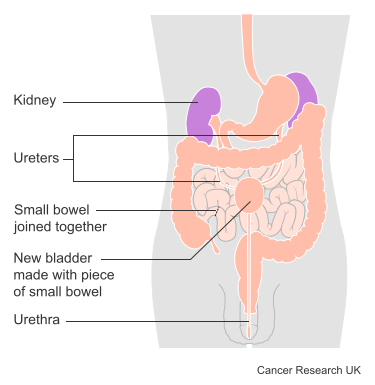
Your surgeon usually makes a new bladder (neobladder) from a piece of your bowel. They connect the new bladder to:
the tubes that drain urine out of your (ureters)
the tube that takes urine out of your body (urethra)
When you have a neobladder, you continue to pass urine through your urethra. It feels different to passing urine from a normal bladder. You will need to learn how to push the urine out.
You might need to use a tube (catheter) to empty your bladder if you have difficulty passing urine. You do not need to wear a urostomy bag to collect your urine.
Find out about having a cystectomy
After surgery to remove your bladder, you need another way to collect and pass your urine. Doctors call this urinary diversion, and there are different ways of doing this.
Your surgeon might ask you to choose which type of urinary diversion you want to have. They might recommend one type of diversion over another because of where your cancer is or your general health. A bladder reconstruction is not suitable for everyone.
Your surgeon might suggest you have this type of surgery if:
you want to avoid wearing a urostomy bag to collect urine
you're at low risk of your cancer coming back
your cancer doesn't affect your urethra
your bowels are working well and aren't affected by any other problems, such as or previous bowel surgery
your kidneys are working well
you haven’t had and won’t be having radiotherapy to your pelvic area
you are willing and able to learn how to pass a thin tube (catheter) into your urethra
This operation is more complicated than other types of bladder removal surgery. Some people need further surgery to correct problems afterwards.
Your surgeon and specialist nurse will support you before and after your operation. They will tell you about the different options and whether one type might be best for you. And they will show you how to look after and manage the type of urinary diversion you have.
You have a bladder reconstruction during the operation to remove your bladder (cystectomy). You have this operation while you’re asleep so you will have a . The operations takes between 2 and 6 hours.
There are several ways of doing this operation.
Usually, the surgeon uses part of your small bowel to make a new bladder. They take a piece of your bowel and join the cut ends of the bowel back together. They use the piece of bowel to make a pouch inside your body. This is called a neobladder.
They then sew on to the new bladder:
the tubes that carry urine down from the kidneys (the ureters)
the remaining part of the tube that carries urine out of your body (the urethra)
Once healed your urine flows down the ureters as normal and collects in the pouch forming your new bladder.
When you wake up from surgery, you’ll have a lot of tubes attached to your body. These include:
a catheter to drain urine through your urethra
a suprapubic catheter to drain urine through your tummy (abdomen) - you don't always have this type of catheter
ureteric stents - these are thin tubes that drain the urine from your ureters
wound drains
a drip
These tubes will gradually get less as you recover and prepare to go home.
Read more about what to expect when you wake up after your surgery
You’ll be in hospital for between 1 to 2 weeks after this operation.
Your surgeon will leave a catheter in place for several weeks. This allows your urine to drain until the joins of your new bladder heal. You will go home with the catheter, and the nurse will show you how to care for this.
A few weeks after you go home, you’ll come back into hospital for a day or so. Your doctor will check your new bladder isn’t leaking from the joins. If it isn’t they take out the catheter.
Your nurse will teach you how to empty your new bladder.
It can be difficult to learn to pass urine naturally.
When you want to pass urine, you hold your breath and push down into your abdomen. It’s a bit like pushing to open your bowels, but you use the muscles closer to the front of your tummy instead of those near your back passage. You might hear this called the Valsalva manoeuvre.
You have to remember to go to the toilet and do this regularly. You won't have the nerve supply that used to tell you when your bladder is full. It will feel different to how it did before.
At the start, you will need to empty your new bladder more often as it learns to stretch and fill with different amounts of urine. It can take a little while for your bladder to stretch. You also have to wake up once or twice at night to pass urine.
It's not uncommon to leak urine from your new bladder (incontinence) especially at night when you're asleep.
You might also need to pass a catheter into your new bladder. If you need to do this, your specialist nurse will show you how to do it. This is called self catheterisation.
Bladder cancer might come back in the urethra. If it does, you have an operation to remove the urethra and make an opening on your tummy wall (stoma). This means your urine is collected outside your abdomen (urostomy).
Find out more about life after bladder cancer surgery
There is a risk of problems or complications after any type of operation. We have a separate page about general problems you might have after surgery to remove your bladder and urinary diversion.
Read about problems after surgery
You might have one or more of the following problems after a bladder reconstruction.
After this operation, you have to learn how to empty your new bladder. Some people are unable to fully empty their bladder. This can lead to:
needing to wee more often
an increased risk of urine infections and stone formation
kidney problems
Your surgeon and specialist nurse will support you as you learn to empty your new bladder. You might need to pass a catheter into your urethra to fully empty your new bladder. This is called self-catheterisation. They will show you how to do this.
Some people leak urine after a bladder reconstruction, particularly at night. Your surgeon and specialist nurse talk to you about how common this is. They might be able to suggest ways to help with this. For example, pelvic floor exercises to strengthen your pelvic floor.
In some situations, there might be a problem with the muscle (sphincter) that stops urine from leaking out of your bladder. If this is the case, your surgeon will talk to you about your options.
There might be a narrowing where the urethra joins the new bladder. This narrowing is called a stricture and can be caused by scar tissue. This can cause a blockage and make it difficult to pass urine.
You might be able to have a catheter for a period of time to help with this. Or your surgeon might be able to stretch the narrowing and open it up again. They do this under general anaesthetic. After the operation, the surgeon might ask you to use a special catheter now and again. This is to stop the blockage coming back.
The surgeon uses a piece of your bowel to make the new bladder. The bowel tissue continues to make mucous. Mucous can build up inside the new bladder and this can cause problems such as infection or bladder stones.
You might need to pass a catheter and flush out your bladder. This is called a bladder wash out. Your nurse will show you how to do this.
Your bowel is designed to reabsorb nutrients from food. The new bladder is made from your bowel and this bowel tissue continues to absorb some of the chemicals in your urine. You can reabsorb a chemical called chloride and get high levels in your blood.
You will have blood tests to check this when you go to your follow up appointments. If your levels are high, your doctor might give you bicarbonate tablets to help. Long term high chloride levels may cause problems such as:
fluid retention
high blood pressure
bone problems
You are usually in hospital for 7 – 14 days after the operation. Your nurse will tell you how to get the equipment you need when you are at home.
Your nurse is likely to set up an ordering system for you to get the bags. This can be from:
your local pharmacy prescription service
a medical devices delivery service
a prescription card your nurse gives you with details of all the equipment you need -you take the card to your GP to get the bags and supplies
When you collect this from your pharmacy you will then need to show your medical exemption card so you don't have to pay for your equipment.
You may have a visit. You will have phone numbers to contact for advice when you are sent home. They are there to help you. So do ask for their help with any questions or difficulties you have.
Last reviewed: 20 Aug 2025
Next review due: 20 Aug 2028
Muscle invasive bladder cancer means the cancer has spread into or through the muscle layer of the bladder. The main treatments include surgery, radiotherapy and chemotherapy.
Surgery is one of the main treatments. The surgeon usually removes all your bladder and makes a new way for you to pass urine.
You will have a few tubes in place when you wake up, such as a drip, wound drain and catheter. You will be in hospital for around 1 or 2 weeks.
After treatment for muscle invasive bladder cancer, you have regular check ups. This is called follow up.
Coping with bladder cancer can be difficult. There are things you can do to help, and people who can support you practically and emotionally.
Bladder cancer starts in the inner lining of the bladder. The bladder stores urine and is in the lower part of your tummy (abdomen).

About Cancer generously supported by Dangoor Education since 2010. Learn more about Dangoor Education



Search our clinical trials database for all cancer trials and studies recruiting in the UK.

Connect with other people affected by cancer and share your experiences.

Questions about cancer? Call freephone 0808 800 40 40 from 9 to 5 - Monday to Friday. Alternatively, you can email us.
