Treatment for non muscle invasive bladder cancer
BCG is a vaccine for . It also helps to stop or delay bladder cancers growing back or spreading into the deeper layers of the bladder.
The vaccine contains a weakened that can be used as a medicine.
We are not quite sure how BCG works for bladder cancer. It seems to encourage cells of the to grow and become very active in the bladder lining. These cells probably kill off any cancer that might grow back or have been left behind. This is called immunotherapy.
BCG helps to stop bladder cancers coming back in many people.
Your treatment plan depends on your risk of the bladder cancer spreading or coming back after treatment. Your doctor will tell you whether you have:
low risk non muscle invasive bladder cancer
intermediate risk non muscle invasive bladder cancer
high risk non muscle invasive bladder cancer
Find out more about bladder cancer risk in treatment decisions
You usually have BCG into the bladder if you have a high risk of non muscle invasive bladder cancer coming back. Or spreading into the deeper layers of your bladder.
You have a course of BCG after to remove the bladder tumours (TURBT).
You usually have BCG into the bladder once a week for 6 weeks. This is called the induction course.
You may then have BCG into the bladder every few weeks or months for the next 1 to 3 years. This is called maintenance BCG therapy.
You usually have treatment at the cancer day clinic.
Before each treatment, you need to stop drinking fluids. This stops the urine from diluting the drug in your bladder and will help you hold the BCG more easily. Your hospital will tell you when to stop drinking.
On the day a nurse will check your urine to see if you have any infection. You also see the doctor.
You have the BCG into your bladder through a thin tube (). The catheter goes into your bladder through the . The urethra is the tube that carries wee (urine) from the bladder out of the body. The doctor or nurse puts in the catheter on the day unit.
BCG is a liquid. Your doctor or nurse puts the liquid into your bladder through the catheter. Usually, they then remove the catheter.
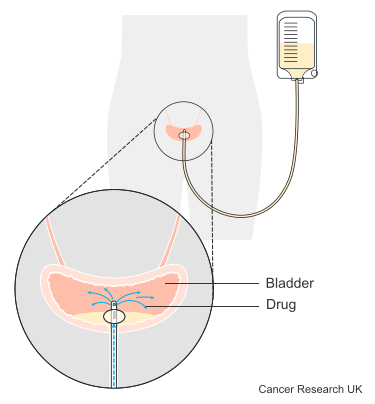
You must not pass urine for 2 hours. This gives the BCG time to be in contact with the lining of the bladder. Some hospitals may ask you to change position every now and again to make sure the drug reaches all parts of your bladder lining.
When you do pass urine, you need to be careful for 6 hours after the treatment because the vaccine contains . Your nurse or doctor will ask you to:
be careful when you pass urine so that you don't get it on your skin - men should sit down to pass urine, to reduce the chance of splashing
pour about half a pint of neat bleach into the toilet bowl after you've been to the toilet, and leave it for 15 minutes before flushing
wash your hands and genitals immediately with warm soapy water after you pass urine
Some hospitals allow you to go home with the medicine in your bladder if you live close by and are okay with the treatment. Your team will let you know if you can do this. You should follow the advice on what to do when you pass urine.
You need to drink lots of fluid (2-3 litres) after this treatment for the first few days. It helps clear your system of the BCG.
You should not have sex for 24 hours after each treatment. During your course of treatment and for a week afterwards, you should wear a condom during sex.
Having bladder cancer and its treatment can be difficult to cope with. Tell your doctor or nurse about any problems or side effects that you have. The nurse will give you telephone numbers to call if you have any problems at home.
You might get some side effects with this treatment. These might include:
having an irritated bladder, which feels a bit like having a urine infection
passing urine more often and more urgently than usual
having blood or debris in your urine
flu-like symptoms for 24 to 48 hours after each treatment
discomfort and pain when passing urine
If you have any of these symptoms, tell your doctor or specialist nurse. They might be able to help ease and treat these side effects.
There is a very small chance that some of the BCG could get into your system. This causes an infection similar to TB, which needs treatment. This rare side effect could happen during or some months after treatment.
Some of the general symptoms are:
fever and chills
joint or muscle pain
feeling sick or vomiting
cough
skin rash
feeling extremely tired
You might have other symptoms depending on where the infection causes problems in your body. For example, an infection in your lungs might cause breathlessness.
Find out about other treatment for non muscle invasive bladder cancer
Last reviewed: 14 Jul 2025
Next review due: 14 Jul 2028
Non muscle invasive bladder cancer means the cancer cells are only in the bladder’s inner lining. You usually have surgery to remove the cancer. You may have further treatment into the bladder.
The stage, type and grade of your cancer helps your doctor decide which treatment you need.
Coping with bladder cancer can be difficult. There are things you can do to help, and people who can support you practically and emotionally.
Bladder cancer starts in the inner lining of the bladder. The bladder stores urine and is in the lower part of your tummy (abdomen).

About Cancer generously supported by Dangoor Education since 2010. Learn more about Dangoor Education



Search our clinical trials database for all cancer trials and studies recruiting in the UK.

Connect with other people affected by cancer and share your experiences.

Questions about cancer? Call freephone 0808 800 40 40 from 9 to 5 - Monday to Friday. Alternatively, you can email us.
