Types
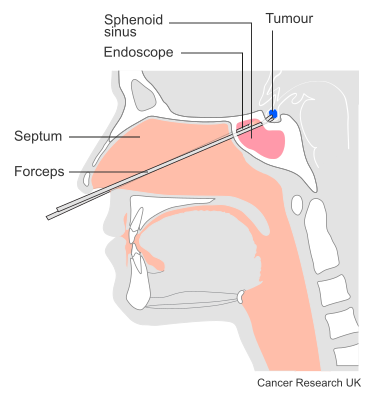
The pituitary gland is a small gland that lies at the base of the brain, just behind the eyes. It is part of the . The pituitary gland makes and releases hormones into the bloodstream. These hormones control many functions in the body.
Tumours that start in the pituitary gland are also called pituitary neuroendocrine tumours (PitNETs) or pituitary adenomas.

Find out more about the endocrine system and the pituitary gland
Pituitary tumours can be put into 2 groups depending on whether they make hormones or not.
These are:
non functioning pituitary tumours. These are also called non secreting tumours and do not make hormones
functioning pituitary tumours. These are also called secreting tumours and make hormones
The symptoms you have depend on whether the tumour makes hormones. If it does, the symptoms also depend on which hormones it makes.
Pituitary tumours that don't make hormones are usually larger than tumours that produce hormones. They can cause headaches. They can also press on the nearby optic nerves. The optic nerves connect the eyes to the brain. This pressure can cause changes to your eyesight, such as blurred or double vision. Pituitary tumours that don't make hormones can also affect normal pituitary gland tissue. This can cause changes in hormone levels.
There are a number of different types of pituitary tumours that make hormones. These tumours can cause quite unusual symptoms depending on the type of hormone they produce.
About 17 out of every 100 tumours found inside the skull (about 17%) are pituitary tumours. Most pituitary tumours are benign (not cancer). They usually grow slowly. They rarely spread to other parts of the brain or to other parts of the body.
Your doctor examines you and checks your symptoms. You also have tests to diagnose a pituitary tumour. This helps your doctor plan the treatment. The tests you might have include:
blood tests
or
We have more information about tests
The treatment you need depends on the type of pituitary tumour you have. It also depends on how well you are and your symptoms.
You might not be able to drive for some time if you have a pituitary tumour. Ask your doctor or specialist nurse how your diagnosis and treatment might affect your right to drive.
Read more about brain tumours and driving
You have regular appointments with your doctor or nurse after your treatment finishes. At each visit, they will examine you and ask how you are feeling. They will also ask if you have had any symptoms or side effects, and if you have any worries. You might have an MRI scan on some visits, and you might also have blood tests. How often you have these appointments depends on your individual situation. Some people have follow up for a few years and others for life. Your doctors will explain what will happen in your situation.
Coping with a diagnosis of a pituitary tumour can be difficult, both practically and emotionally. It can be especially difficult when you have a rare tumour. Being well informed about the type of tumour you have, and its treatment can make it easier to cope.
Find out what you can do, who can help and how to cope with a brain tumour
Last reviewed: 07 Aug 2026
Next review due: 07 Aug 2029
Primary brain tumours are tumours that start in the brain. They can start anywhere in the brain and there are many different types of tumours.
You usually start by seeing your GP who might refer you to a specialist. Or you might go to Accident and Emergency (A&E) if you suddenly have severe symptoms.
Treatment for a brain or spinal cord tumour depends on the type of tumour you have, where it is and your general health.
Survival depends on different factors such as the type, position and grade of your brain or spinal cord tumour.
It can be difficult to find out that you have a brain tumour. There is practical and emotional support available to help you, your family and your friends cope with a brain or spinal cord tumour.

About Cancer generously supported by Dangoor Education since 2010. Learn more about Dangoor Education



Search our clinical trials database for all cancer trials and studies recruiting in the UK.

Connect with other people affected by cancer and share your experiences.

Questions about cancer? Call freephone 0808 800 40 40 from 9 to 5 - Monday to Friday. Alternatively, you can email us.