Childhood acute lymphoblastic leukaemia (ALL)
Many children and young people with childhood leukaemia have their treatment as part of a clinical trial.
Individual trials close when enough people have joined. There might then be a period of time before the results are available. New trials then open based on what has been learned. Because of research, treatment for childhood ALL has got much better over the past 40 to 50 years. Now, more than 90 out of 100 children with ALL (more than 90%) survive.
This video shows how Cancer Research UK is involved in researching childhood leukaemia. It’s 1 minute and 30 seconds long.
AllTogether-1 is a clinical trial developed on what we have learned from previous ALL research such as UKALL 2011. This trial is for those newly diagnosed with ALL from the ages of 1 to 45 years old (up to age 29 in the UK). It’s a large trial that includes several European countries. The overall aim is to improve survival and the quality of survival for children and young adults with ALL.
Alongside this trial researchers are also looking at how well ciprofloxacin works at preventing infections in children during the .
Find out more about AllTogether-1
This was the largest clinical trial looking at ALL treatment in the UK. Doctors treat childhood ALL with chemotherapy. They use a number of drugs in different combinations. As with all treatments, there are side effects and doctors are always looking for ways to reduce them.
Researchers on this trial wanted to see if by changing the they could reduce the side effects of current leukaemia treatment. And if it reduces the chance of leukaemia coming back after treatment.
This trial has closed and we are waiting for the results. You can find out more detail about the trial and the results when they are available on our trials database.
Find out more about the UKALL 2011 trial
ALL that has not gone away with treatment (refractory) or has come back after treatment (relapsed) is harder to treat.
Researchers are looking for new treatments for cancers including leukaemia when standard treatments stop working or don’t work.
They are looking at a few different combinations of treatment. Which treatment your child has depends on the found in the of their cancer.
They may have a combination of one or more of the following types of drugs:
Find out about the eSMART trial
Other researchers are looking at a type of targeted cancer drug called carfilzomib. It’s a proteasome inhibitor.
Proteasomes are in cells. They help to break down proteins that the cell doesn't need. Carfilzomib blocks the proteasomes so the proteins build up inside the cell. The cell then dies.
Doctors have added carfilzomib to induction chemotherapy for relapsed or refractory ALL. The doctors want to find out:
the best safe dose of carfilzomib to give
what the side effects are
how safe it is
how well it works for children with relapsed or refractory ALL
if it improves the number of children that get into
Other targeted drugs being looked at include:
ponatinib
bortezomib
White blood cells called lymphocytes play an important part in fighting infection and diseases, including cancer. There are different types of lymphocytes. T cells are one type.
T cells move around the body to find and destroy defective cells. When you come into contact with a new infection or disease, the body makes T cells to fight that specific infection or disease. It then keeps some in reserve so that if you come across the infection again your body can recognise it and attack it immediately.
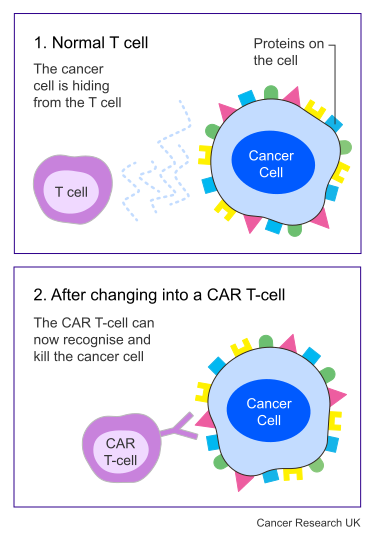
T cells are good at fighting infection. But it can be difficult for them to tell the difference between a cancer cell and a normal cell. So the cancer cells can hide away and not be recognised.
Scientists are trying to find ways to get T cells to recognise cancer cells. One possible way to do this might be CAR T-cell therapy.
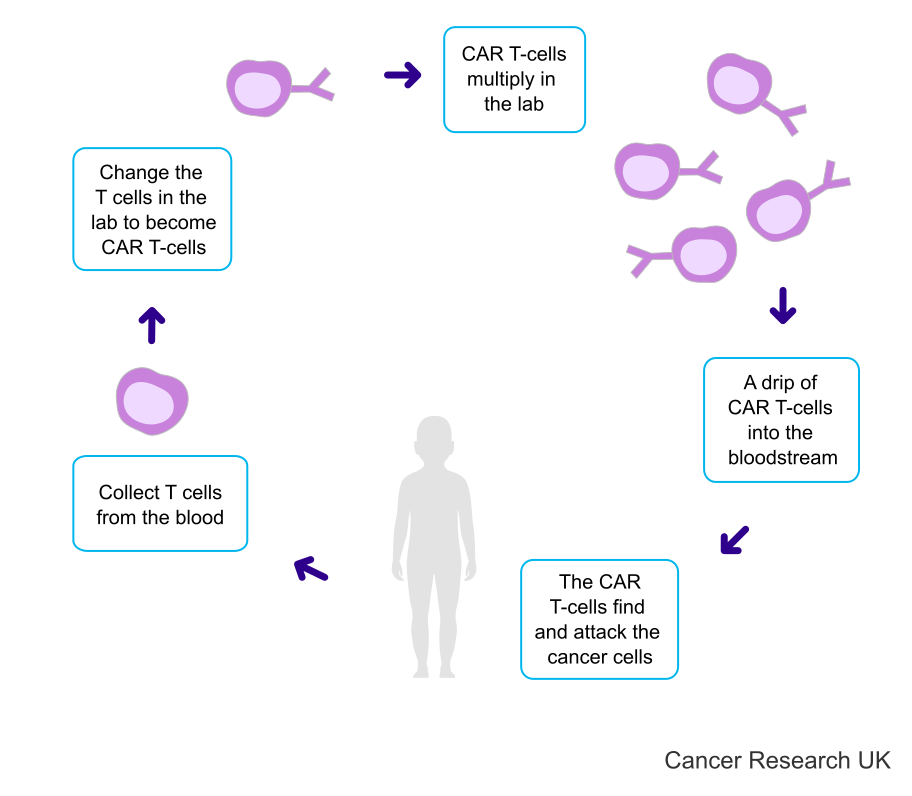
CAR T-cell therapy is a very specialised treatment. A specialist team takes a sample of T cells from your child’s blood or a donor. This process is called apheresis.
In the laboratory the T cells are changed. You might hear this called genetically engineering the T cell. The T cell is now a CAR T-cell. CAR stands for chimeric antigen receptor. These CAR T-cells are designed to recognise and target specific proteins on the cancer cells.
These changed T cells grow and multiply in the laboratory. Once there are enough cells your child has a drip containing these cells back into their bloodstream. The aim is for the CAR T-cells to then recognise and attack the leukaemia cells.
Although CAR T-cell therapy is now used as a treatment for some children with a type of leukaemia called B cell ALL. Researchers continue to look at it in clinical trials for other types of ALL.
Your child might have a stem cell transplant as part of their treatment for acute lymphoblastic leukaemia (ALL).
Having a transplant means destroying as many leukaemia cells as possible and replacing these with healthy .
Researchers in Manchester want to create new blood tests that can help predict if:
acute graft versus host disease (aGvHD) is developing
the leukaemia is coming back (relapse)
The researchers hope by developing this tests they can give medicines to prevent these problems from happening or treat them early on.
Find out more about graft versus host disease (GvHD)
Researchers are looking into children’s nutritional health while having treatment for leukaemia. They are studying how body composition and energy use at rest may change during treatment. Body composition refers to the percentage of muscle, fat, bone and water in the body.
The researchers are also looking at the development of sarcopenic obesity during treatment. Sarcopenic obesity means having a combination of:
high body fat
muscle loss
poor muscle strength
The researchers hope this study may help them identify who may be at greater risk of developing sarcopenic obesity. They want to help doctors give better advice about diet and lifestyle while children are having leukaemia treatment. This may help to reduce problems linked to sarcopenic obesity.
Researchers are also looking into the long term effects of treatment for all types of childhood cancer. The Centre for Childhood Survivor Studies is carrying out the British Childhood Cancer Survivor study.
This research is looking at children who were diagnosed with cancer between 1940 and 1991 and lived for at least 5 years after diagnosis.
This type of research takes many years to produce results because the children need to be followed throughout their lives. So, it will be some time before we know the results.
The best person to speak to about your child joining a clinical trial is their hospital consultant.
There might also be a research nurse at their primary treatment centre you can talk to. You could always chat through the options with your child’s clinical nurse specialist. They can help answer any questions you or your child might have.
For information about clinical trials you can also call the Cancer Research UK information nurses on freephone 0808 800 4040. They are available to help Monday to Friday, 9am to 5pm.
You can find more information about clinical trials for acute lymphoblastic leukaemia on our clinical trials database.
Last reviewed: 25 Mar 2025
Next review due: 25 Mar 2028
It is extremely distressing to find out that your child has leukaemia. Find out about what you can do to help you and your family cope when your child is diagnosed with acute lymphoblastic leukaemia (ALL).
Find out about the possible late effects of treatment and how your child is followed up after treatment.
Treatment for acute lymphoblastic leukaemia (ALL) in children is divided into different phases The main treatment is chemotherapy. Find out about the other treatments and different phases.
Find out about childhood acute lymphoblastic leukaemia, how it is diagnosed and treated, and resources and organisations that can help you cope.
Find out about what to expect when your child is first diagnosed.
Hear stories about our scientists, and children and young people whose lives have been changed by research we have funded.

About Cancer generously supported by Dangoor Education since 2010. Learn more about Dangoor Education


Search our clinical trials database for all cancer trials and studies recruiting in the UK.

Connect with other people affected by cancer and share your experiences.

Questions about cancer? Call freephone 0808 800 40 40 from 9 to 5 - Monday to Friday. Alternatively, you can email us.
