Treatment for non muscle invasive bladder cancer
This is an operation to remove non muscle invasive bladder cancer. Your surgeon removes the cancer through the urethra. The urethra is the tube that carries urine from the bladder to the outside of your body.
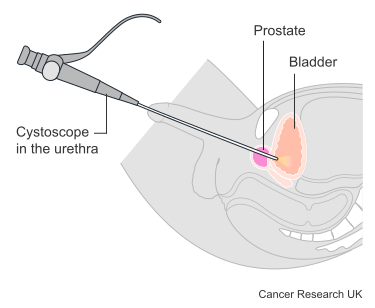
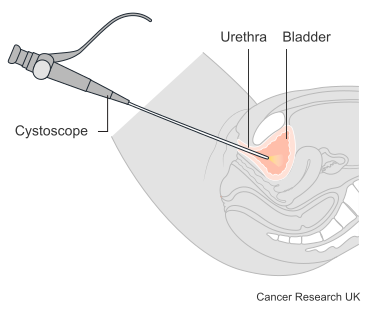
The surgeon puts a thin rigid tube called a cystoscope into your urethra. The cystoscope has optic fibres inside it, a light, camera and an eyepiece at one end. The surgeon can look through the eyepiece or see images on a TV screen.
The surgeon passes small instruments down the cystoscope to cut any tumours out of your bladder lining.
TURBT is the main treatment for non muscle invasive bladder cancer. You usually have this operation as your first treatment.
TURBT can also diagnose bladder cancer and find out whether the cancer has spread into the muscle layer of the bladder wall. The surgeon removes the tumour (or tumours). They send the tissue they remove to the laboratory. This tells them:
how far the cancer has grown through the bladder wall (the stage)
how abnormal the cancer cells look under the microscope (the grade)
You sometimes have a second TURBT operation within 6 weeks of the first. You usually have this if you have a high risk non muscle invasive bladder cancer. This is to make sure the surgeon has removed all the cancer. And to double check how far the cancer has grown.
You usually have this at the hospital in the day surgery unit. You might go home on the same day of your operation. But sometimes you have to stay in overnight or for a couple of days.
You usually have it under , which means you are asleep. In some hospitals, you may have a spinal anaesthetic instead of a general anaesthetic. This is an injection into your spine (epidural) so you can’t feel anything from below your waist.
This treatment takes between 15 to 90 minutes.
A nurse usually sees you in pre-assessment clinic a week or two before surgery.
They take some measurements such as:
weight
temperature
heart and breathing rate
oxygen level
blood pressure
You might have a , and . This is normal for anyone having a general anaesthetic.
Your nurse gives you instructions about the operation and what to bring on the day. It’s a good idea to bring an overnight bag. They’ll also tell you when to stop eating or drinking.
For a general anaesthetic, you usually have to stop eating at least 6 hours before the operation. But you can usually drink sips of water up to 2 hours before.
On the day of your operation, you see the surgeon who explains the procedure and asks you to sign a consent form. This is a good time to ask any questions. You also meet the anaesthetist who will give you the general anaesthetic and looks after you while you’re asleep.
Your nurse gives you a hospital gown to change into. Then the nurse and a porter take you to the anaesthetic room on a theatre trolley.
You usually have a small tube put into your vein (cannula) before you have the anaesthetic. This is so they can give you medicines directly into your vein. Most hospitals also give you an injection of before the procedure.
Once you are asleep or the spinal anaesthetic is working, your surgeon passes the cystoscope into your urethra.
They use the cystoscope to look at the inside of your bladder. They also pass small instruments down the cystoscope. They use these instruments to remove any tumours. They then use a probe to seal (cauterise) the area to stop any bleeding.
Watch this 2 minute video to find out how you have a TURBT.
It is important that the surgeon finds and removes all the areas of cancer during your TURBT operation. They might use different methods to help them find all the tumours. These methods are not available in all centres. Your surgeon will explain what method they will use.
Your surgeon uses different colour lights (blue and green) to get a better look and understanding of your bladder. These lights can reach deeper tissue layers in the bladder and can help show up abnormal areas.
Your surgeon may put a dye into your bladder an hour before you have your TURBT. The dye is sensitive to light. During the surgery they shine a blue light on the bladder lining. This is called photodynamic diagnosis (PDD). It can help to show up areas of cancer more clearly.
You usually have a single dose of into the bladder at the end of your operation. Or you may have it when you return to the ward. You have it within 6 hours of having the operation.
This treats any cancer cells that may have been left behind and reduces the risk of the cancer coming back.
Read more about having chemotherapy into the bladder
You go to a recovery area to rest after an anaesthetic. Your nurse monitors you until you wake up from the anaesthetic properly.
You can then eat and drink normally.
You may have a tube into your bladder (catheter) to drain urine into a bag for a short time. The nurse removes it before you go home.
You may see blood in your urine. This might last for up to 3 days. This won't mean you can't go home.
You may notice some bleeding 10 to 14 days after the operation. Do not worry about this - it's normal. Drink plenty. But if it doesn’t stop within 24 hours, call your hospital advice line.
Your doctor asks you to drink lots of fluids to flush out your bladder. This helps to protect you from getting a urine infection.
When you first start passing urine it may burn and sting for several days. You’ll be given painkillers to help make this more comfortable.
If you've had a general anaesthetic you’ll need a friend or relative to take you home and stay with you overnight. For 24 hours after the anaesthetic, you shouldn’t:
drive
drink alcohol
operate heavy machinery
sign any legally binding documents
A TURBT is a safe procedure. Your nurse will tell you who to contact if you have any problems after your TURBT. Your doctors make sure the benefits of having a TURBT outweigh any possible risks.
Some possible risks include:
You should contact the hospital immediately if:
the bleeding is getting worse
there are blood clots in your urine
you have severe pain when passing urine
you can’t pass urine and have severe pain
There is a risk of infection. Symptoms can include:
going to the toilet more often
burning and stinging when passing urine
high temperature
feeling hot and cold or shivery
cloudy or offensive smelling urine
generally feeling unwell
Contact your doctor as you might need antibiotics to treat an infection.
Rarely, there can be a small tear (perforation) of the bladder or it may be injured. It’s likely this will settle with a catheter for a few days to rest the bladder. Very rarely you may need surgery to help fix this problem.
You might get a small bruise around the area where they put the needle in for the cannula.
There is a risk that the anaesthetic or antibiotics will leak outside the vein. This can cause swelling and pain in your arm but it's rare.
This depends on whether you have low risk, intermediate risk or high risk non muscle invasive bladder cancer.
If your cancer is low risk, you might not need any further treatment. You will have regular cystoscopies.
You might need to have further treatment if your cancer is intermediate or high risk.
Read more about treatment for non muscle invasive bladder cancer
Last reviewed: 07 Jul 2025
Next review due: 07 Jul 2028
Non muscle invasive bladder cancer means the cancer cells are only in the bladder’s inner lining. You usually have surgery to remove the cancer. You may have further treatment into the bladder.
A cystoscopy is a test to look at the inside of your bladder and the tube that carries urine from your bladder to the outside of your body (urethra). Find out how you have it and what happens afterwards.
The stage, type and grade of the cancer helps your doctor decide which treatment you need.
You usually start by seeing your GP. They ask about your symptoms and may examine you. They then might refer you to a specialist. The tests you may have include urine tests, a test to look inside your bladder (cytoscopy) and scans.
Coping with bladder cancer can be difficult. There are things you can do to help, and people who can support you practically and emotionally.
Bladder cancer starts in the inner lining of the bladder. The bladder stores urine and is in the lower part of your tummy (abdomen).

About Cancer generously supported by Dangoor Education since 2010. Learn more about Dangoor Education



Search our clinical trials database for all cancer trials and studies recruiting in the UK.

Connect with other people affected by cancer and share your experiences.

Questions about cancer? Call freephone 0808 800 40 40 from 9 to 5 - Monday to Friday. Alternatively, you can email us.
